

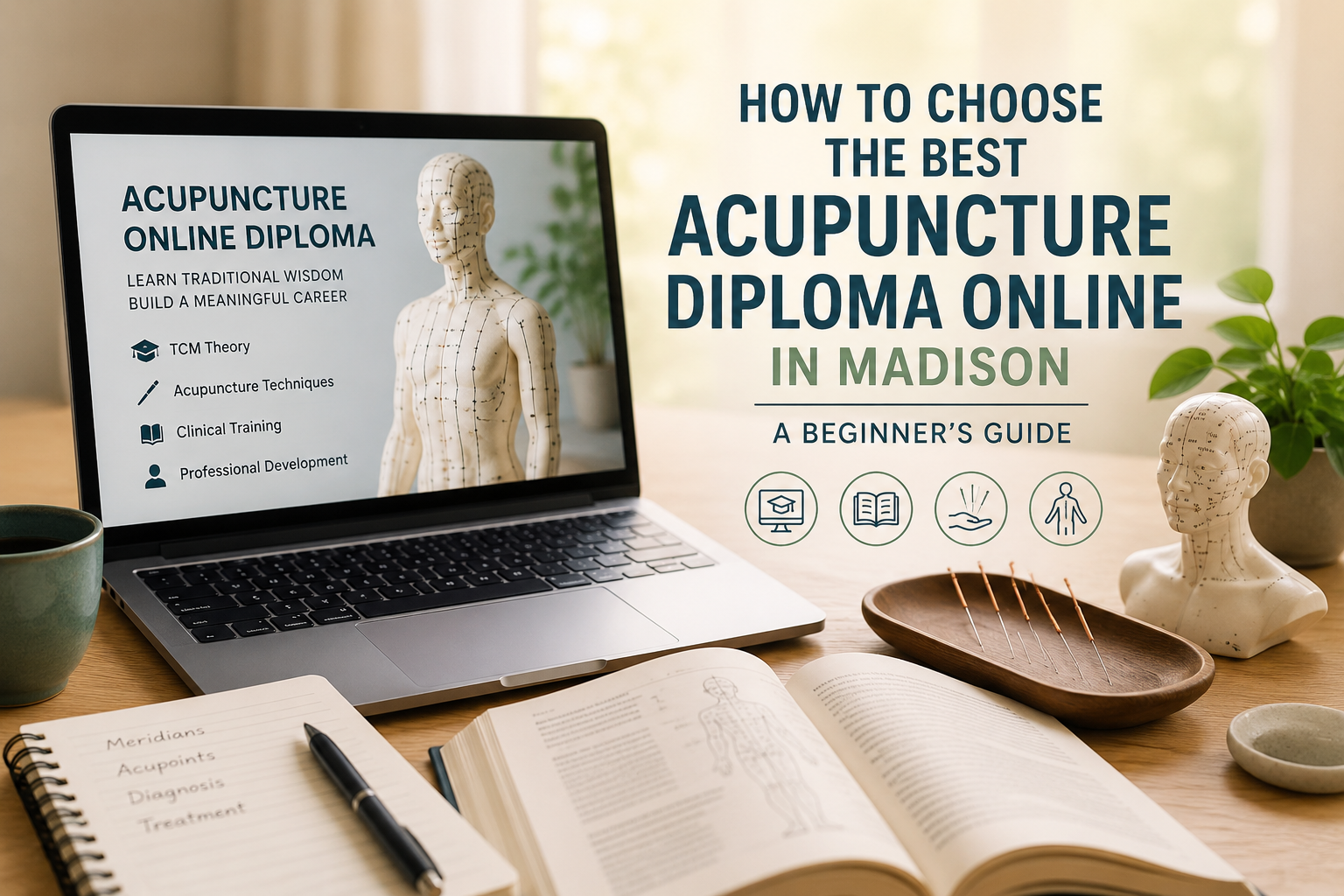
Acupuncture is a specialized healthcare field that demands far more than a passing interest in Traditional Chinese Medicine (TCM). Becoming a skilled practitioner requires years of focused study, hands-on clinical training, and a firm understanding of both Eastern and Western health principles. For many aspiring acupuncturists in the Madison area, the appeal of online or hybrid education is real—flexibility around work schedules, family commitments, and the ability to learn from home all sound attractive. But flexibility alone shouldn’t drive your +decision.
Searching for an acupuncture diploma online in Madison brings up a wide range of programs, from short introductory courses to multi-year professional qualifications. Knowing how to tell them apart—and understanding which ones align with Wisconsin’s licensing requirements—could save you significant time and money.
This guide is designed to help beginners navigate that landscape clearly and confidently.
What Is an Acupuncture Diploma Program?
Not all acupuncture programs lead to the same outcome, and the name alone rarely tells you what you need to know. Broadly speaking, acupuncture education falls into three categories:
- Introductory courses: Short, often inexpensive programs covering the basics of TCM theory and acupoint identification. These do not qualify graduates to practice professionally.
- Professional diploma or certificate programs: More intensive qualifications that may include clinical components and are designed to prepare students for entry-level practice—though eligibility for licensure still depends on Wisconsin-specific requirements.
- Graduate-level acupuncture and TCM programs: Master’s or doctoral-level degrees that typically meet state licensing standards and include substantial supervised clinical training.
Before enrolling in any program, confirm what credential it awards and whether that credential is recognized for your intended purpose.
Can You Study Acupuncture Online in Madison?
The honest answer: some of it, yes. Several components of acupuncture education translate reasonably well to an online format, including:
- TCM theory and philosophy
- Anatomy and physiology
- Acupoint identification (with the support of video demonstrations)
- Ethics and professional practice
- Case-study learning and health assessment
However, acupuncture is a hands-on healthcare discipline. Needling technique, patient communication, and clinical reasoning all require direct practice under qualified supervision. No amount of online video can fully replicate the experience of performing a treatment on a real patient with a licensed practitioner in the room.
Before enrolling in any program marketed as an acupuncture diploma online in Madison, verify exactly how—and where—the clinical training component is completed.
7 Things to Look for in an Acupuncture Diploma Online in Madison
1. Accreditation and Institutional Recognition
Accreditation is one of the clearest indicators of program quality. Accredited programs are evaluated against defined educational standards, which can affect the transferability of credits, eligibility for national certification, and ultimately your path to licensure. Verify the current accreditation status of any school you’re considering directly with the institution and with relevant Wisconsin authorities—this information can change.
2. Wisconsin Licensing Compatibility
This is arguably the most important factor for Madison-area students. Wisconsin’s current acupuncturist licensing requirements include evidence of at least two consecutive years of full-time education and clinical work at a qualifying school. Completing an online course—even a rigorous one—does not automatically make you eligible to practice. Compare each program’s curriculum and clinical structure against Wisconsin’s current licensing rules before committing.
3. Curriculum and Course Content
A strong acupuncture program covers far more than the basics. Look for instruction in:
- Traditional Chinese Medicine foundations
- Meridians and acupoints
- Anatomy and physiology
- Diagnosis and patient assessment
- Acupuncture techniques and needling safety
- Infection control and clinical hygiene
- Ethics and professional practice
- Herbal medicine, where applicable
Short courses focused narrowly on introductory acupuncture concepts are rarely sufficient for professional practice. Breadth of curriculum matters.
4. Hands-On Clinical Training
Practical training is non-negotiable in a healthcare profession. When evaluating any program, ask:
- How many clinical hours are included?
- What supervision is provided?
- Where does the training take place—on campus, at a clinical partner, or locally?
- Are local clinical placements available for Madison-based students?
- How is student competency assessed?
Programs that gloss over these details deserve careful scrutiny.
5. Instructor Qualifications and Student Support
Research the professional backgrounds of the teaching faculty. Are instructors licensed acupuncturists with real clinical experience? Strong student support also matters, particularly in online environments. Look for live virtual classes, access to mentors or academic advisors, practical demonstrations, and career guidance as part of the program offer.
6. Program Schedule and Learning Format
Asynchronous learning gives you maximum flexibility, but it also requires a high degree of self-discipline. Live-online classes add structure and direct instructor access. Hybrid programs blend both, with required in-person components. Before enrolling, check whether the program involves mandatory campus visits, practical assessment days, or clinical rotations that may affect your schedule.
7. Total Cost and Value
Advertised tuition is rarely the full picture. Factor in registration fees, textbooks and materials, equipment, examination fees, travel costs for any in-person training, and post-graduation licensing expenses. Comparing total program cost—not just tuition—gives you a much clearer sense of value.
Online vs. Hybrid vs. Traditional Acupuncture Education
| Format | Potential Advantage | What to Check |
| Online | Maximum scheduling flexibility | How and where clinical hours are completed |
| Hybrid | Combines flexibility with hands-on learning | Campus attendance schedule and clinical requirements |
| In-person | More direct practical instruction | Location, timetable, and total cost |
For a hands-on healthcare profession, hybrid or in-person programs may be more appropriate when substantial clinical training is required. That said, no single format is universally better—what matters is whether the program meets Wisconsin’s requirements and suits your learning style.
Questions to Ask Before Enrolling
Use this checklist when evaluating any acupuncture program:
- Is the program accredited or formally recognized?
- Does it satisfy Wisconsin’s current education and licensing requirements?
- How many clinical hours are included, and where will they take place?
- Are instructors licensed practitioners with relevant experience?
- What credential will I receive upon graduation?
- What additional steps—exams, applications, fees—are required after graduating?
- What is the complete cost of the program?
- Can I realistically complete this program while working full-time?
Common Mistakes Beginners Should Avoid
Many prospective students make avoidable errors when selecting an acupuncture program. The most common include:
- Choosing based on price alone. A low-cost program that doesn’t meet licensing requirements is no bargain.
- Assuming “online” means fully convenient. Clinical training often requires in-person attendance, regardless of how the rest of the program is delivered.
- Skipping Wisconsin licensing research. State requirements are specific—don’t assume a nationally advertised program automatically qualifies you to practice in Wisconsin.
- Overlooking clinical training. Hours of supervised practice are essential, not optional.
- Confusing a continuing-education course with a professional qualification. These are very different things.
- Ignoring instructor credentials. Who is teaching you matters enormously in a clinical field.
- Focusing only on tuition. Total program cost is what you’ll actually spend.
How to Compare Acupuncture Programs in Madison
Creating a structured comparison table can help you evaluate your options objectively. Score or rank each program across these categories:
- Accreditation and institutional recognition
- Wisconsin licensing eligibility
- Curriculum breadth and depth
- Clinical training hours and structure
- Faculty qualifications
- Schedule and format
- Total cost
- Student support offerings
- Career and licensing preparation
Contact programs directly for current and accurate information. Educational requirements and licensing rules do change, so information found online—including on program websites—should be verified at the source.
Is an Online Acupuncture Diploma Right for You?
Online or hybrid acupuncture education can be a practical option for students who need scheduling flexibility and are comfortable with self-directed study. If you’re exploring acupuncture as a personal interest or seeking continuing professional development, an online course may serve your goals well.
Aspiring professional acupuncturists, however, should prioritize programs that provide the education and clinical training required by Wisconsin’s licensing authorities—and not select a program primarily because it’s available online. Convenience is a reasonable factor, but it should never outweigh compliance.
FAQs
Can I earn an acupuncture diploma completely online?
Some programs offer primarily online coursework, but acupuncture’s clinical components typically require in-person training. Fully online programs that include no hands-on element are unlikely to satisfy professional licensing requirements in Wisconsin.
Is an online acupuncture diploma enough to become a licensed acupuncturist in Wisconsin?
Not automatically. Wisconsin requires evidence of at least two consecutive years of full-time education and clinical work at a qualifying institution. Always verify whether a specific program meets current state requirements before enrolling.
How long does it take to study acupuncture?
Professional acupuncture training typically takes between three and four years at the graduate level, depending on the program and whether you study full- or part-time. Short diploma courses exist but may not qualify graduates for licensure.
What subjects are taught in acupuncture programs?
Professional programs typically include TCM theory and philosophy, anatomy and physiology, meridian and acupoint study, diagnostic assessment, needling techniques, infection control, clinical ethics, and often herbal medicine. Graduate programs also include supervised clinical practice hours.